
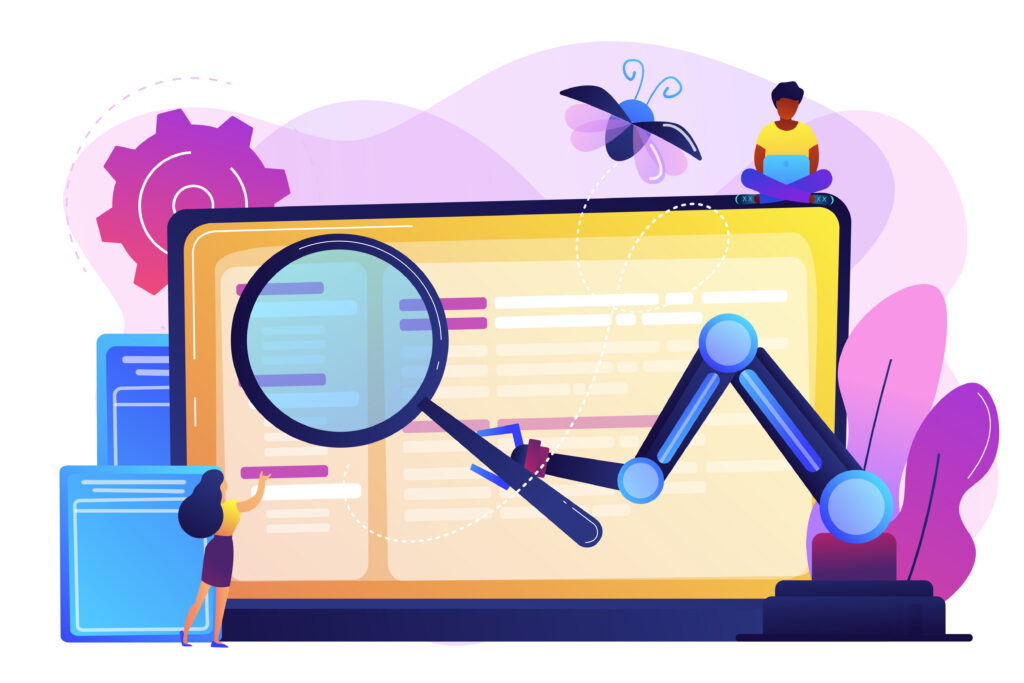
When Google’s AI Overview, ChatGPT, or Perplexity generates an answer to a question, it doesn’t pull from a random grab bag of websites. It runs an evaluation. Fast, systematic, and ruthless. Dozens of potential sources go in, and only a handful come out with a citation.
So, what’s actually happening behind the scenes? And more importantly, what can you do about it?
We’ve spent the last two years studying how AI tools select sources, testing it across client campaigns and tracking which content gets cited and which gets ignored. The patterns are consistent enough to act on. Here’s what we’ve found.

Before any AI tool can evaluate your content, it has to be able to reach it. This is the most basic requirement and somehow still the one we see businesses get wrong most often.
If search engine crawlers can’t access your pages because of blocked robots.txt files, broken internal links, slow server responses, or JavaScript rendering issues, your content is invisible. Google has stated clearly that foundational technical SEO remains essential for visibility in AI Overviews and AI Mode. No crawl, no index, no citation. It’s that simple.
Think of it as a velvet rope. Your content might be the best in the room, but if the bouncer can’t see your name on the list, you’re not getting in.
AI search engines can tell the difference between a page that genuinely covers a topic and one that just name-drops it. Surface-level content that touches on a subject without committing to real depth gets passed over every time.
A page about “how to choose a CPA” that offers three generic tips will lose to one that covers selection criteria, red flags, questions to ask, pricing structures, and what to expect from the first meeting. AI models are trained to identify thoroughness. They reward it.
Depth also means staying focused. A page that tries to cover five loosely related topics dilutes its signal. AI tools prefer content that goes deep on one subject rather than wide across many. Pick your lane and own it.
That sounds counterintuitive, but it’s exactly how AI citation works. These tools don’t just read your content. They extract from it. The easier your content is to extract from, the more likely it gets cited.
This comes down to how you organize information:
We’ve restructured content for clients where the information was excellent, but the formatting was working against them. Same expertise, same insights, just reorganized with clear headings and extractable points. The difference in AI visibility was measurable within weeks, and it’s a core part of how we approach SEO for AI Search.
This is where a lot of businesses have more leverage than they realize. AI tools are increasingly prioritizing content that offers something other sources don’t. Original research, proprietary data, unique case studies, firsthand experience, expert analysis.
If your content simply restates what ten other websites have already published, AI models have no reason to choose your version. But if your page includes a data point, example, or insight that can’t be found elsewhere, it becomes a more valuable citation source.
This is where E-E-A-T (Experience, Expertise, Authoritativeness, and Trustworthiness) becomes tangible. A page authored by someone with demonstrable experience, with a visible bio and credentials, carries more weight than anonymous content making the same claims. Your real-world expertise is a competitive advantage here. Use it.
AI models evaluate whether a source is credible enough to cite, and that evaluation extends well beyond the page itself.
Domain authority and backlinks matter, but they’re part of a bigger picture. AI tools also look at the consistency of your online presence, whether your site is referenced by other credible sources, how frequently your content is updated, and whether your business information is accurate across the web.
A website that publishes regularly on a focused topic, earns references from respected industry sources, and maintains accurate, up-to-date business information sends authority signals that AI tools recognize and reward. It’s the same principle that drives effective Chicago SEO for our local clients, just extended into the AI layer.
This is one of the most underappreciated factors in AI source selection, and it’s one we’ve been building into client strategies with real results.
When your business or content is referenced by third-party publications, directories, comparison articles, and industry resources, it creates an external validation layer that AI models factor into their evaluation. Being mentioned in a “Top 10” listicle, cited in an industry report, or referenced in a news article doesn’t just build backlinks. It builds the kind of corroboration AI tools use to confirm whether a source is worth citing.
This even extends to brand mentions without a link. AI models can identify when a brand is discussed across multiple sources and use that pattern as a trust signal.
AI source selection follows a logical sequence: can the content be accessed, does it cover the topic deeply, is it structured for extraction, does it offer something original, is the source credible, and do other sources corroborate it?
At Dabaran, we build content strategies around these criteria because they represent where search is heading. We’ve watched clients go from zero AI citations to consistent appearances in AI-generated answers by systematically strengthening each of these areas. It’s not magic. It’s methodology. Our AI SEO Services are built around these exact factors, and every one of them is within your control.

332 S Michigan Ave, Chicago,
IL 60604
11516 183rd Pl Unit NE
Orland Park, IL 60467


We are Dabaran, a Chicago-based SEO firm boasting over a decade of experience in the field.
© Copyright 2026 Dabaran Inc. All Rights Reserved. HTML Sitemap Privacy policy
Programs provi patient peace mind when option.

